Muck Rack vs Cision vs JournoFinder, Media Databases Compared
Muck Rack and Cision are the two names that come up most when a PR team goes shopping for a media database. Here’s how they compare, and how JournoFinder works as a more modern alternative.
Muck Rack vs Cision: the short version
Muck Rack is a well known comms tool that offers outreach and monitoring features. It’s generally more modern than legacy tools like Cision, but suffers from a clunky journalist search. Cision is particularly strong in broadcast and print monitoring and wire distribution, but its journalist database is outdated.
JournoFinder is a great value alternative if you’re looking for a current media database and a fast way to build targeted media lists. JournoFinder has an AI Agent that builds targeted media lists for you, as well as features that alert you to relevant breaking news and journalist requests.
Muck Rack vs Cision vs JournoFinder at a glance
Swipe to see all columns
| Capability | Muck Rack | Cision | JournoFinder |
|---|---|---|---|
| Core strength | All-in-one comms tool covering monitoring and outreach | Traditional broadcast and podcast monitoring, newswire | Efficient at building targeted media lists |
| Database quality | Reviewed on an annual cycle | Updated on the research team's review cycle | Updated in real time, verified emails |
| AI capabilities | Search and list agents (Standard+), pitch writer, AI visibility tracking (Premier) | Coverage analysis, AI visibility dashboard, AI pitch writer | AI Agent that builds media lists, reactive opportunity spotting, ideation |
| MCP (connects to tools like Claude) | Partly. Announced for monitoring data only, not the journalist database | No. No functionality | Yes. Yes, includes journalist database, reactive alerts, and journalist requests |
| Monitoring and reporting | Online on every plan, podcasts from Standard; print, broadcast, social and custom reporting are paid add-ons | Print, broadcast, podcasts, social; dashboards built by hand from saved searches | No functionality |
| Journalist requests | No. No functionality | No. No functionality | Yes. Instant alerts to relevant journalist requests |
| Reactive PR features | Partly. AI opportunity-spotting feature on Brand Premier or Media Intelligence plans only | No. No functionality | Yes. Instant alerts for relevant breaking news, every plan |
| Price | Starts from around $5,000 a year (reported), roughly $415 a month | Around $12,625 a year (reported median), roughly $1,050 a month | From $119 a month |
Sources: vendor product, pricing and help pages, correct as of September 2026.
Describe your story, get a media list
No manual work, no irrelevant contacts
Muck Rack’s core strengths
- More modern than the enterprise platforms. Muck Rack is a web app built for PR teams rather than a sprawling suite like Cision, and reviewers consistently call it the easiest of the big platforms to pick up.
- Outreach and monitoring in one plan. Muck Rack covers pitching, building media lists and online coverage monitoring in one tool.
- Scale and trust. Muck Rack has been around for 17 years now, so it’s well known and trusted in PR.
Cision’s core strengths
- Broadcast and podcasts. Cision tracks more than 3,000 TV and radio stations plus over 60,000 podcasts. Almost nobody else in the category monitors broadcast that deeply.
- Wire distribution. Cision owns PR Newswire, so you can send a release and monitor the coverage it generates inside the same account.
- Paywalled coverage. Cision reaches over 10,000 premium paywalled titles across more than 190 countries and 96 languages.
JournoFinder’s core strengths
- Database and media list building. Describe your story in a sentence and JournoFinder’s AI Agent builds the media list for you from a continuously updated and verified, international database of bylined and non-bylined journalists.
- AI integration. JournoFinder’s full product runs as an MCP connection, so you can build different workflows inside Claude or ChatGPT.
- Affordability. JournoFinder costs $189 a month for one seat, or $119 a month billed annually, against Muck Rack’s roughly $5,000 a year and Cision’s reported median of $12,625. No contract, no sales call, no onboarding project.
Main weaknesses of Muck Rack, Cision and JournoFinder
Muck Rack’s main weakness is gated features. Print, broadcast and social monitoring are paid add-ons, and tools like the Search Agent, Media List Agent and Generative Pulse only unlock from Standard plans and above, so the AI capabilities you see marketed aren’t all included on Starter plans.
Cision’s main weakness is the media database. Stale contacts are the most consistent complaint about Cision on every review site.
JournoFinder’s main weakness is lack of media monitoring. If you want coverage tracking and reporting in the same tool as your media database, JournoFinder isn’t currently suitable.
Core differences between Muck Rack, Cision and JournoFinder
Database quality
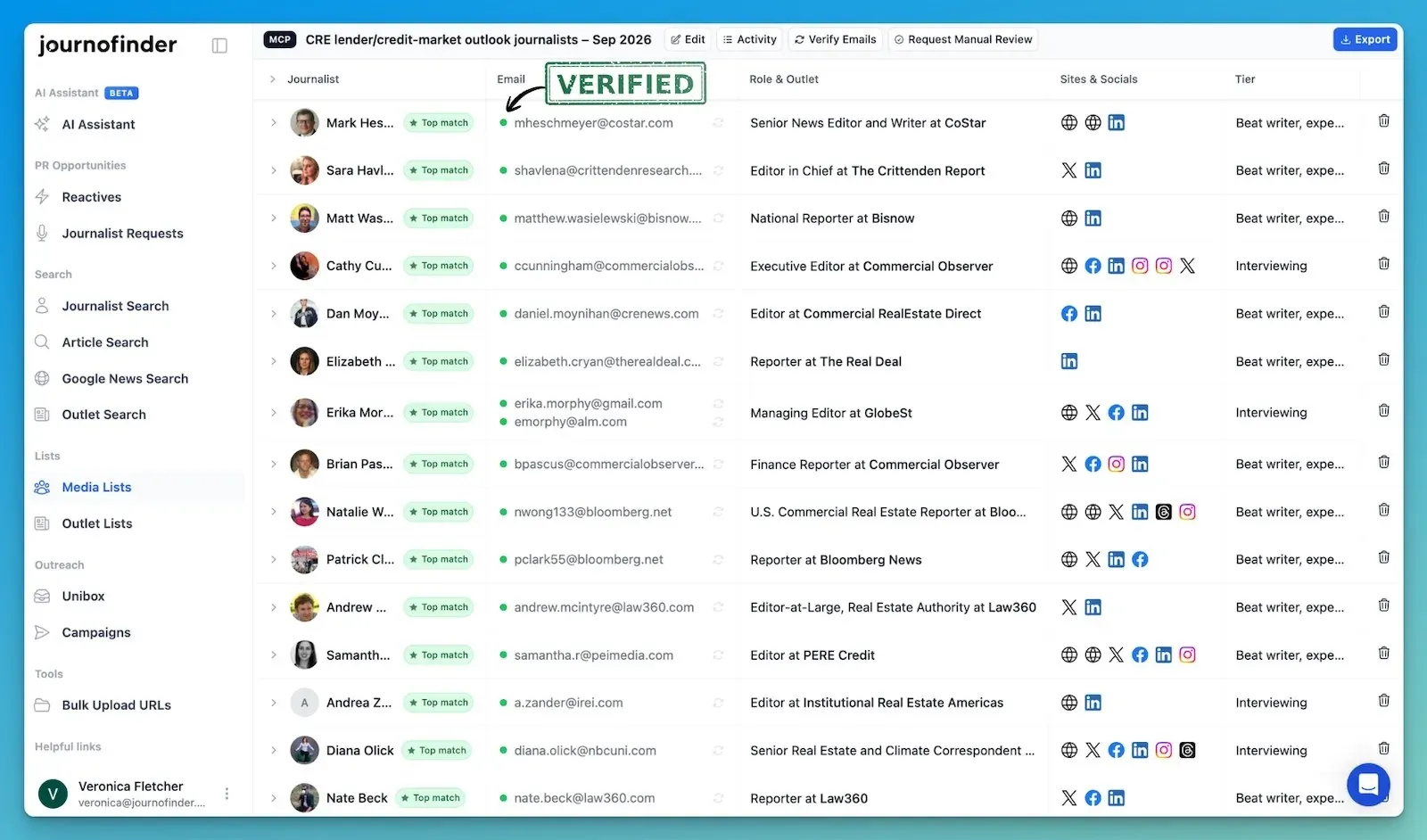
Cision’s weakest point is the media database, with users often complaining of finding outdated contacts. Muck Rack’s data is better maintained than Cision’s, but users still report high bounce rates. JournoFinder’s database is continuously updated in real time and every email is verified, giving it the best quality data of the three.
Muck Rack lets journalists edit their own profile and only reviews listings once a year, so a contact can sit outdated for months, and G2 flags data inaccuracy as a top complaint.
Cision runs a bigger version of the same problem. A research team reviews the database on a cycle that can’t keep pace with journalists changing beat or outlet, and Capterra reviewers regularly find journalists who’ve left the publication.
JournoFinder updates the database continuously instead of on a cycle, picking up job changes as they happen, and re-verifies every email the moment it’s added to a media list.
Media list building
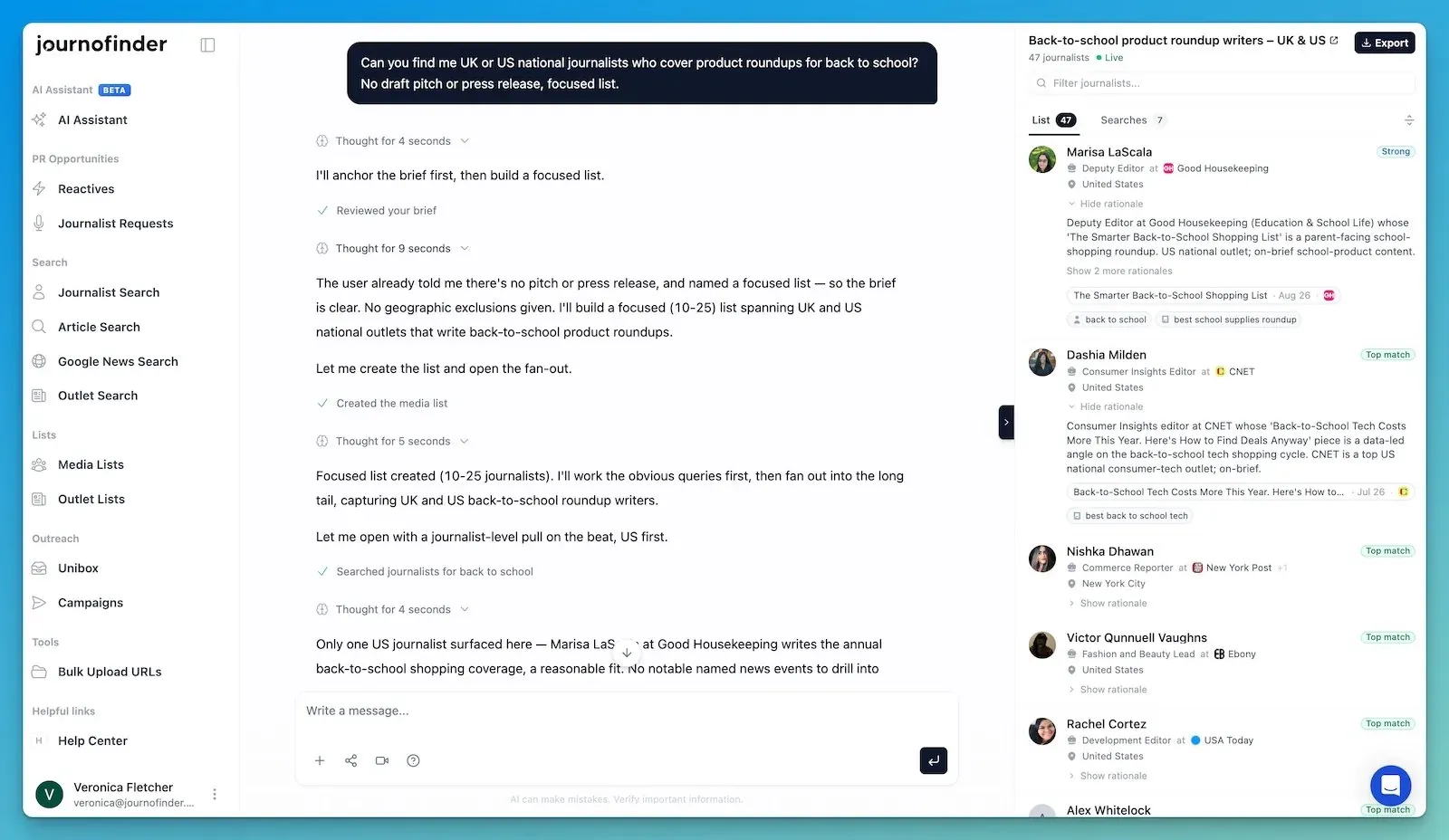
Cision and Muck Rack both rely on keyword searches and filtering to build media lists. Muck Rack offers AI tools such as the Search Agent to help, but they still sit on top of Boolean search. JournoFinder’s AI Agent builds your media list from a plain language brief and checks every journalist against it before adding them.
Cision’s list building is keyword search and manual filtering, with AI only suggesting search terms.

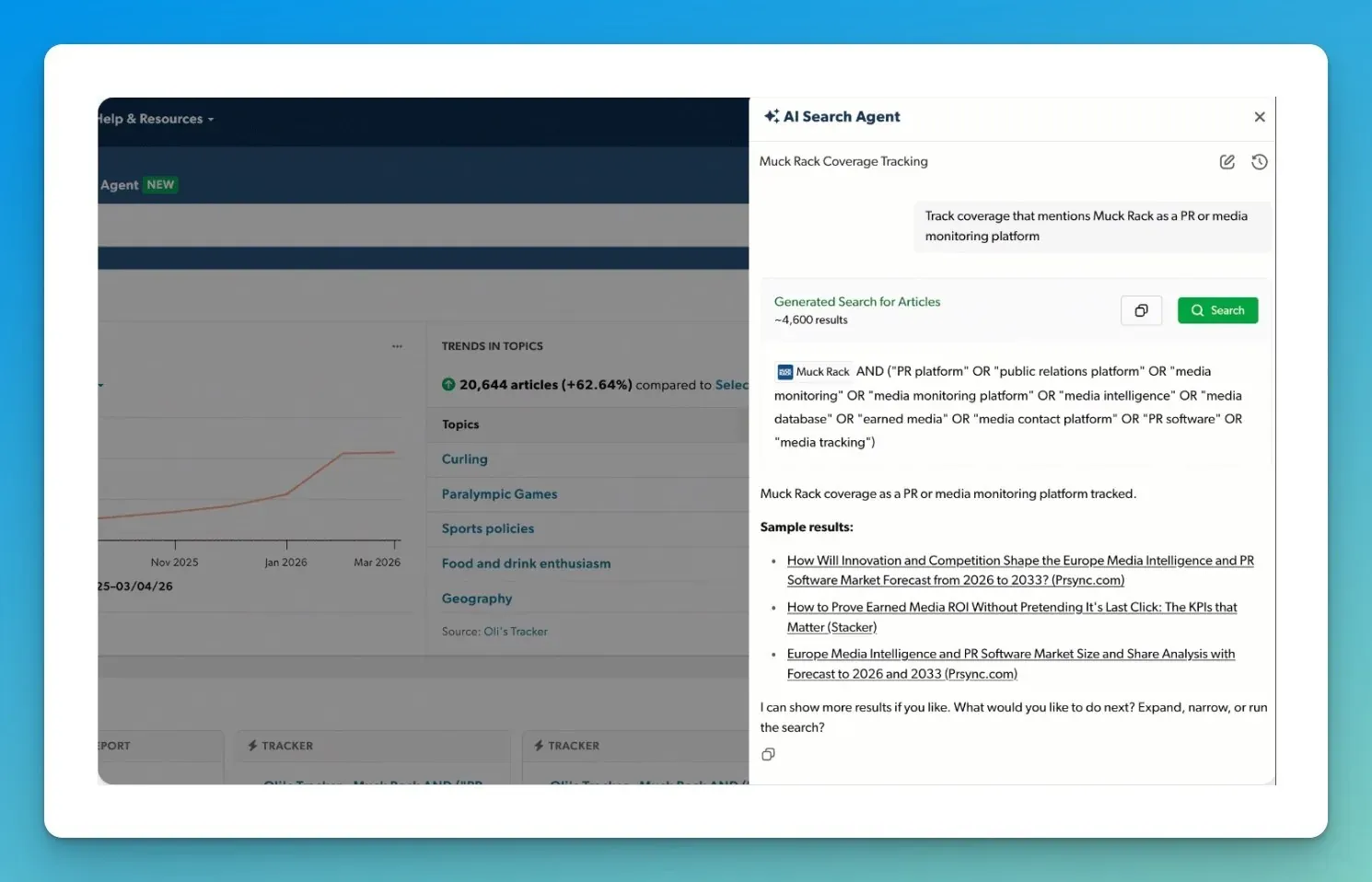
Muck Rack layers a Search Agent, which turns a natural language brief into search terms, and a Media List Agent, which suggests journalists from the results, on top of keyword search known for messy, irrelevant results.
JournoFinder’s Agent runs the search in multiple ways, including a live Google News search, and shows its reasoning for each journalist it adds. You can refine the list by chatting with the Agent afterwards, and you can always search the database and build a list by hand yourself if you’d rather.
AI capabilities
Cision’s AI is focused on the monitoring and reporting side of the platform, with no MCP as of September 2026. Muck Rack spreads its AI across pitching, list building and coverage, though the strongest tools sit on higher tiers. Muck Rack has announced an MCP for monitoring data, not the journalist database.
JournoFinder’s AI Agent is available on every paid plan, and every feature, including the journalist database, is available through the JournoFinder MCP.
Cision’s AI tools include AI Coverage Analysis to help you decide next steps, an AI Visibility Dashboard that tracks brand mentions in AI answers, and an AI pitch writer that turns a rough message into a finished email.
Muck Rack’s AI tools include PressPal.ai for pitch drafting, the Media Brief Assistant for interview prep, and Generative Pulse for tracking brand visibility in AI answers, though most of these features sit on Standard or Premier plans.
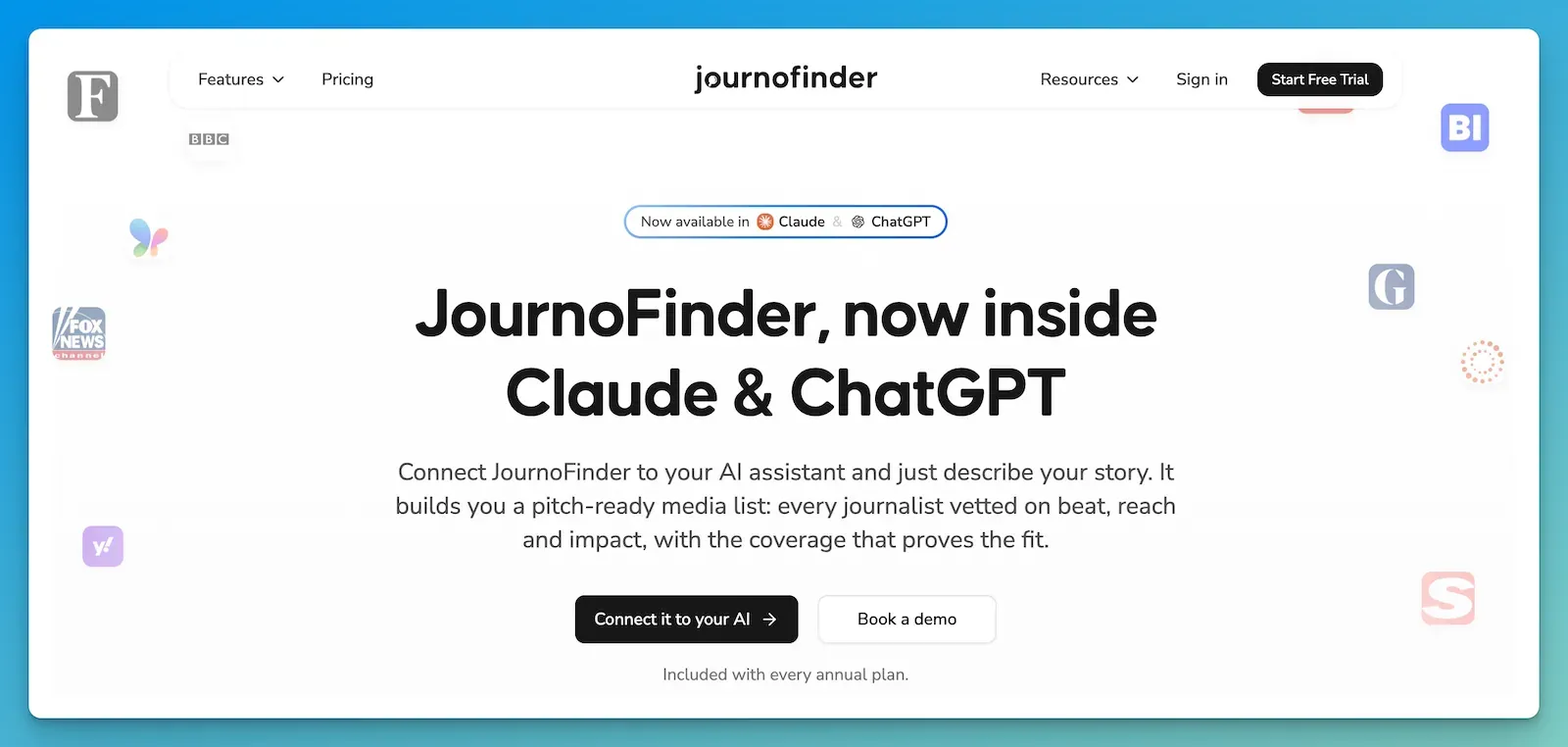
JournoFinder’s AI Agent can run a whole campaign from one brief. It builds lists, finds reactive angles and journalist requests, and researches individual journalists. Because it’s available as an MCP, you can wire it into your own workflows in Claude or ChatGPT.
Monitoring and reporting
Cision has the strongest monitoring, covering print, broadcast, podcasts, online and social in one platform. Muck Rack monitors online on every plan but charges extra for print, broadcast and social. JournoFinder doesn’t offer monitoring.
Cision’s standout monitoring feature is React Score, which automatically flags harmful content, fake news or hate speech in your coverage, and its reporting tool lets you build a dashboard by hand from saved searches and metrics like reach and sentiment.
Muck Rack’s standout feature is Dynamic Presentations, which builds reports from your coverage data and keeps them automatically in sync as new coverage comes in. Podcast monitoring is included from Standard plans up, covering more than 2.4 million shows.
JournoFinder doesn’t offer media monitoring or reporting.
Features JournoFinder offers that Muck Rack and Cision don’t
- Reactive alerts on every plan. We watch the news and alert you when a story breaks that your client can comment on, with the journalists covering it.
- Journalist requests. We aggregate journalist requests from across the web in real time and alert you instantly when there’s a match.
- MCP database. Build lists, check requests and catch breaking stories inside Claude, ChatGPT, or any MCP enabled tool.
Try the Agent on your next story.
Muck Rack vs Cision vs JournoFinder pricing
Swipe to see all columns
| Capability | Muck Rack | Cision | JournoFinder |
|---|---|---|---|
| Published entry price | No. Not published | No. Not published | $189 a month, or $1,428 a year at $119 a month |
| Reported prices from real buyers | From around $5,000 a year reported; Vendr puts small teams between $10,000 and $25,000 | Median $12,625 a year (106 deals, per Vendr) | $189/month or $119/month annual, published |
| Is pricing published | No. No | No. No | Yes. Yes, in full |
| How you buy | Demo, then quote | Demo, then quote | Card, online, instant |
| Minimum term | Annual | Annual | Yes. None |
| Renewal | Not published | Not published | Cancel whenever |
| Free trial | No. No, demo only | No. No, demo only | Yes. 7 days, card taken at signup |
Sources: vendor pricing, product and help pages, correct as of September 2026.
How much does Muck Rack cost?
Muck Rack doesn’t publish a price. Reported figures start around $5,000 a year, and Vendr puts small team contracts between $10,000 and $25,000. One Reddit user said Muck Rack was cracking down on shared accounts and quoted them $34,000 a year for a team of 12.
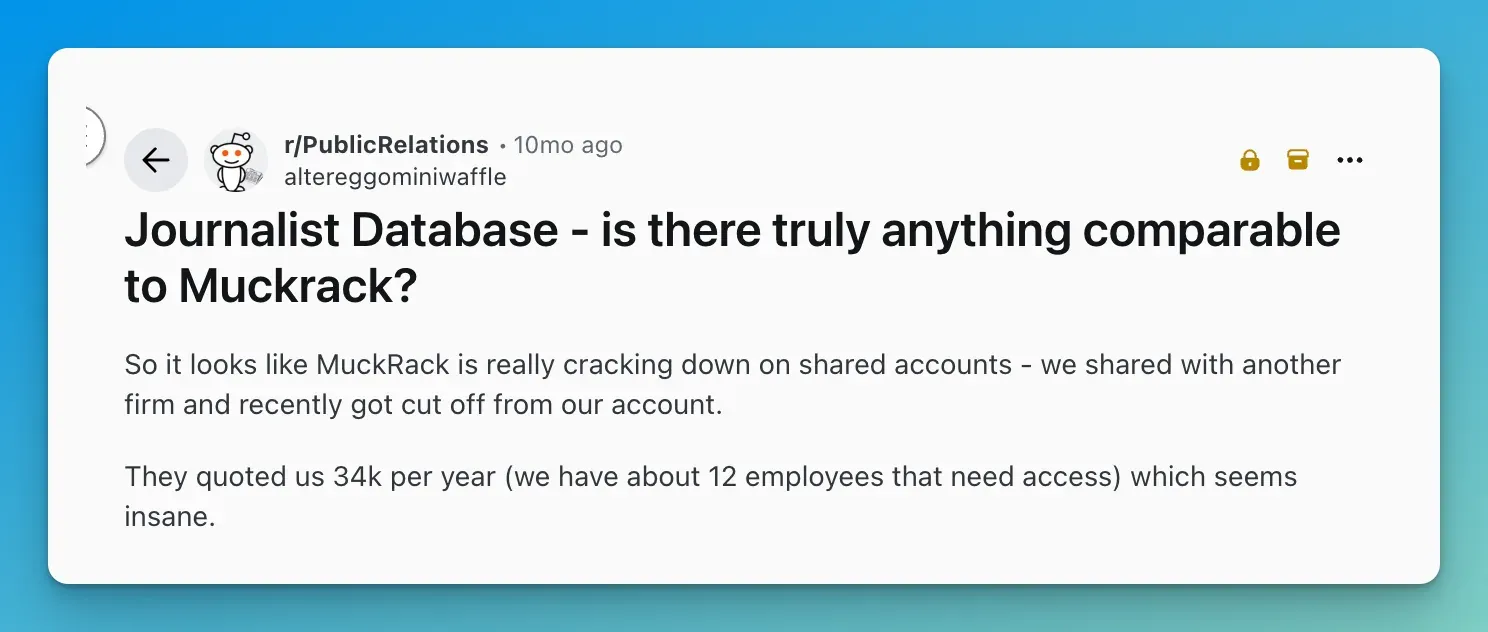
Their pricing page lists six things you pay for on top of your plan. Print and broadcast monitoring, social listening, press release distribution and the API are all add-ons, so the plan price often isn’t the price you end up paying.
How much does Cision cost?
Cision doesn’t publish a price, but reported figures put the average around $12,625 a year. A single seat typically runs about $7,000, and team plans usually fall between $15,000 and $40,000.
What you pay comes down to your user count, the features you need and the service level. Vendr’s data also shows contracts renew automatically with a 30 to 60 day cancellation window, and prices tend to climb 3 to 7% each year.
How much does JournoFinder cost?
JournoFinder is $189 a month for one seat. Annual works out at $1,428 a year, which is $119 a month, or $2,748 a year for three seats. Other seat counts can be arranged on request.
The prices are on the site, you sign up online, and there’s no contract and no quote to wait for. JournoFinder also offers a 7 day free trial.
JournoFinder, the modern media database
- AI agent builds your media lists
- Works inside Claude and ChatGPT
- Updated in real time
What people say about Muck Rack
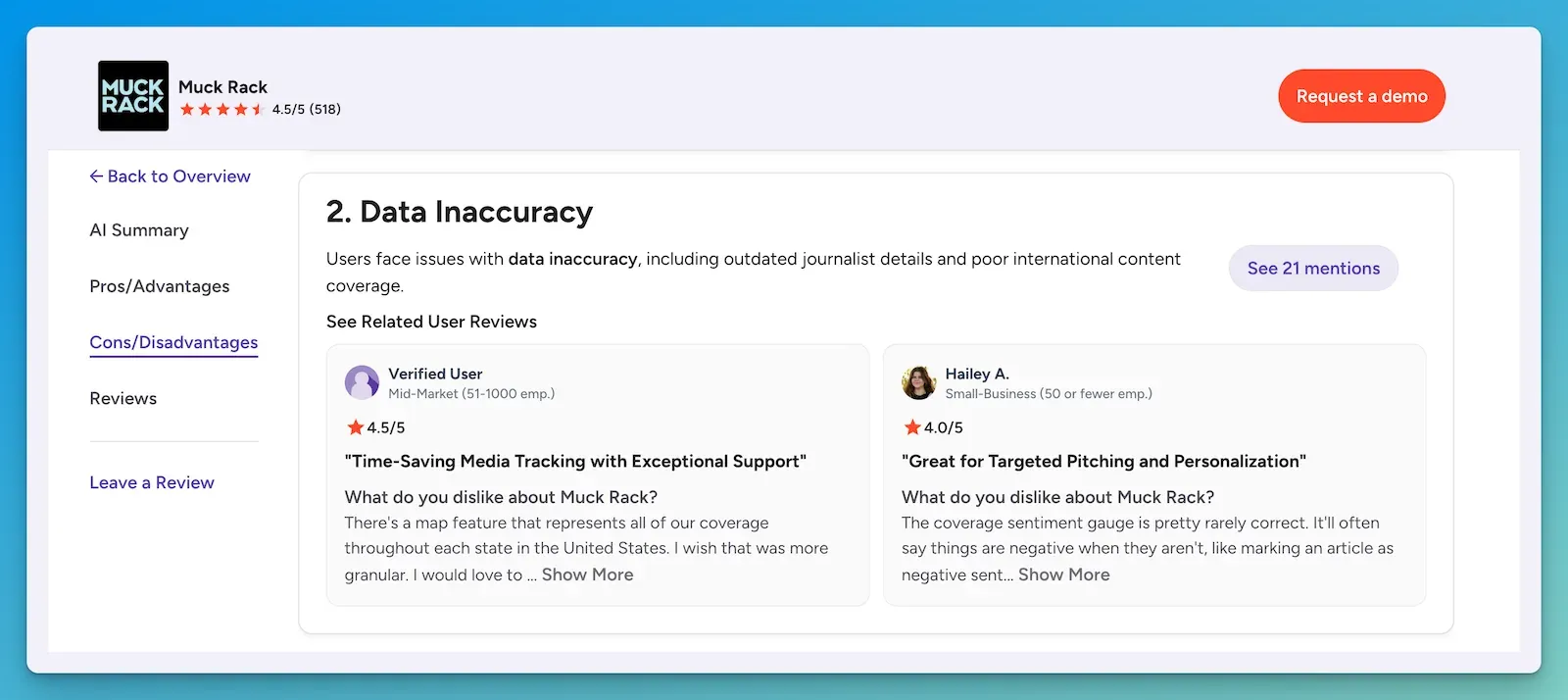
Muck Rack is easy to use
Ease of use is what reviewers mention most about Muck Rack, with the modern interface and intuitive list building called out repeatedly on G2. Several reviewers contrast Muck Rack directly with bigger, more complex platforms, saying there’s far less to learn before the whole team’s using it properly.
Muck Rack’s data has accuracy gaps
G2’s cons summary for Muck Rack names data inaccuracy as one of the most mentioned complaints, alongside outdated journalist details and thin international coverage. Capterra reviewers report the same issue from the outreach side, with emails bouncing because a contact moved on before the profile caught up.
Muck Rack’s AI sits on higher tiers
Reviewers note that Muck Rack’s newer AI tools, like the Search Agent and Media List Agent, are priced as add-ons above the base subscription rather than included on Starter. One reviewer put it bluntly, saying the new AI tools “all seem to be priced as add-ons to our base subscription.”
Sources: G2 and Capterra reviews of Muck Rack, Muck Rack’s add-ons page, r/PublicRelations.
What people say about Cision
Cision’s monitoring gets the most praise
Monitoring and reporting are what reviewers single out most about Cision. Users say the automated coverage tagging saves real time compared to compiling reports by hand, and agencies like being able to hand a finished dashboard straight to a client.
Stale contacts are the recurring complaint
Outdated contacts show up as the top criticism of Cision on G2, Capterra and Trustpilot alike. Reviewers describe reaching journalists who left the outlet months ago and lists that need manual cleanup before they’re usable.

The platform is hard to pick up, and support is slow to respond
Reviewers describe a steep learning curve on Cision, dated navigation and a lot to learn before the tool feels natural. On the support side, people report chasing several emails before hearing back, and one Trustpilot review says there’s no longer a way to reach a person directly.
Sources: G2, Capterra and Trustpilot reviews of Cision, r/PublicRelations threads on Muck Rack alternatives and Cision layoffs.
What people say about JournoFinder
JournoFinder is easy to pick up
Reviewers keep coming back to how easy JournoFinder is to learn. People say they’re comfortable using it after one session, and one user called the list building interface “very intuitive and clear.”
Lists come back targeted, not just fast
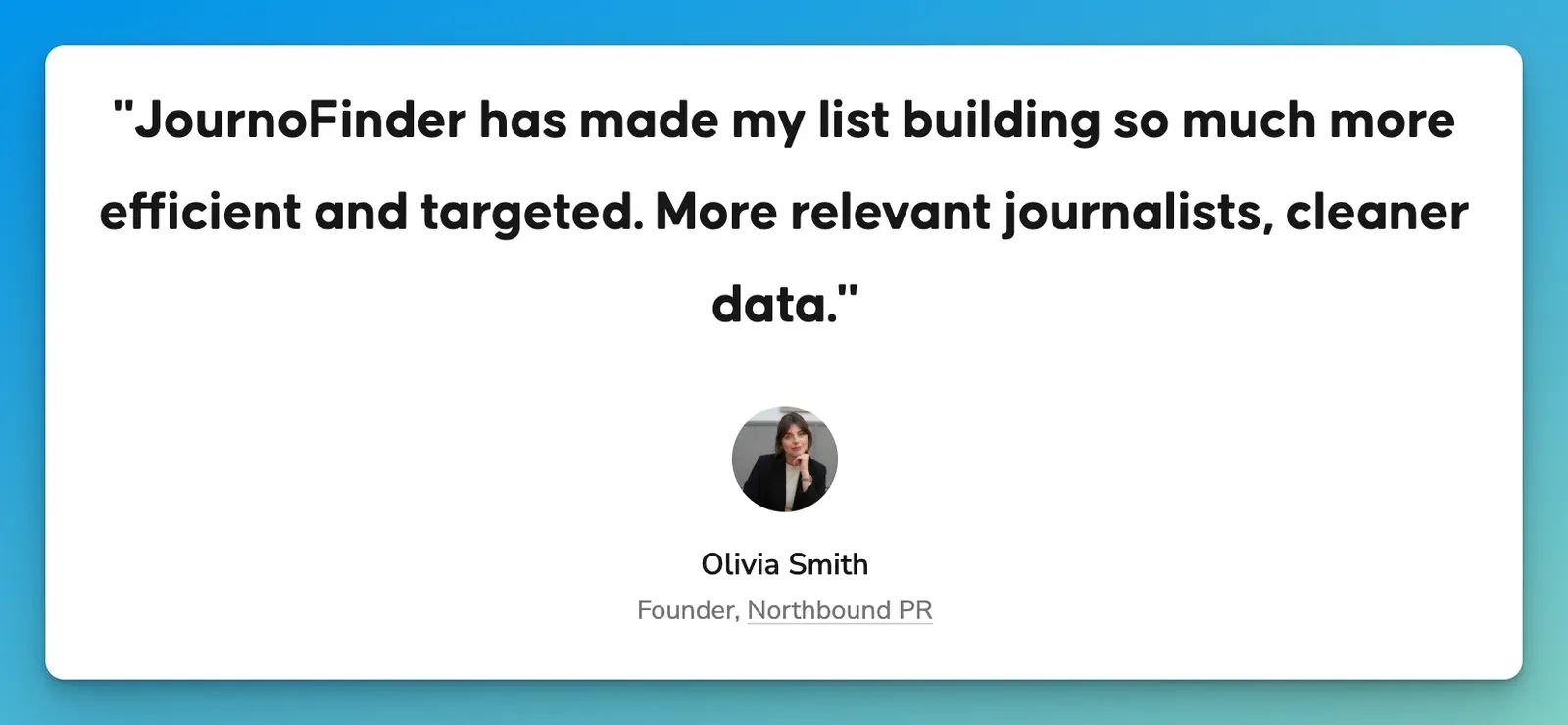
Reviewers say JournoFinder’s lists come back fast without losing relevance. The Agent checks every journalist against your brief before it adds them, so there’s less to cut once the list lands. Olivia Smith, founder of Northbound PR, says her list building is more efficient with JournoFinder, with more relevant journalists and cleaner data. One user says a custom list through the JournoFinder MCP takes one prompt and saves hours of manual work.
The database doesn’t go stale
JournoFinder updates continuously rather than on a review cycle, so a journalist switching outlets shows up right away, and you rarely see a bounce. Carl Borg, founder of One PR, says that on the rare occasion a contact is missing, the JournoFinder team tracks it down quickly.
Quotes are from JournoFinder customer reviews.
Muck Rack vs Cision vs JournoFinder FAQ
Does Muck Rack have an MCP?
The Muck Rack MCP only covers monitoring data, not the journalist database or list building. As of mid September 2026, Muck Rack hasn't published setup instructions or a connection guide for it, so it isn't clear how widely available it is yet.
Does Cision have an MCP?
Is there a cheaper alternative to Muck Rack and Cision?
Do Muck Rack and Cision offer a free trial?
Which media database has the most up to date contacts?
What's the best media database for a small agency or a freelancer?
Who should buy Muck Rack vs Cision vs JournoFinder?
Pay less. Pitch better. Work faster.
See what the Agent builds for your next story.
7 days free. From $119 a month.
Muck Rack is a trademark of Muck Rack, LLC. Cision is a trademark of Cision Ltd. This page is a comparison only. JournoFinder has no affiliation with, and no endorsement from, Muck Rack or Cision.